

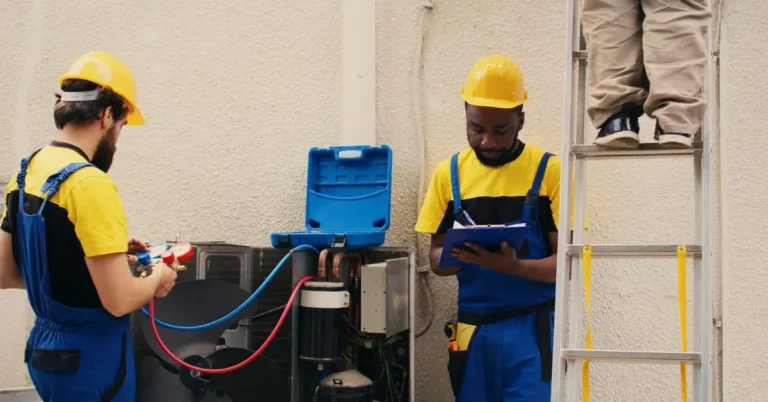
Many homeowners still think of a heat pump as a “mild weather” system. That idea is outdated. Modern heat pumps are built to handle real winters and real summers, often with lower energy use than older HVAC setups. If you want one system that can heat and cool with steady comfort, a heat pump installation is worth a close look.
A heat pump does not create heat the way a furnace does. It moves heat. In winter, it pulls heat from outdoor air and brings it inside. In summer, it reverses the process and moves indoor heat outside, working like an air conditioner. That single principle is what makes heat pumps useful all year.
For many homes, the result is simple: fewer hot and cold spots, quieter operation, and smoother temperature control day to day.
How Heat Pumps Handle Both Seasons
In cooling mode, an air-source heat pump runs much like central AC. It uses a refrigerant cycle to carry heat out of the house. In heating mode, it reverses the cycle and brings heat in. The equipment includes an outdoor unit and an indoor air handler or indoor heads in a ductless setup.
If you are used to the on and off blasts of a furnace, a variable-speed heat pump can feel different. It often runs longer at lower output, which helps maintain an even temperature. That matters in rooms that usually swing too warm in the afternoon or too cold at night.
Cold-climate heat pumps have improved a lot. Many models can still produce usable heat at low outdoor temperatures, and they manage defrost cycles more efficiently than older systems. Some homes also use auxiliary heat, which can be electric heat strips or a dual-fuel pairing with a gas furnace. The best choice depends on your home, your comfort expectations, and your utility costs.
Why Heat Pump Installation Starts With Sizing
The most common mistake is choosing equipment based on the size of the old system or a rough guess. Proper heat pump installation should start with a load calculation. This looks at square footage, insulation, windows, air leakage, sun exposure, ceiling height, and more. It is not busywork. It is how you avoid a system that short cycles, struggles on peak days, or leaves certain rooms uncomfortable.
Oversized equipment can cool too fast and shut off before it removes enough humidity. That can leave indoor air feeling clammy in summer. Undersized equipment can run nonstop and still fall behind during extreme heat or cold. The goal is a balanced match, not the biggest unit on the shelf.
If your home has additions, finished basements, vaulted ceilings, or rooms with lots of glass, those details matter. A careful sizing process is one of the clearest signs you are working with a serious HVAC contractor.
Ducted vs Ductless: Choosing the Right Layout
Heat pumps come in several configurations. The two common paths are ducted and ductless.
Ducted heat pump systems use existing ductwork and feel familiar if you already have central heating and air. This can be a good fit when ducts are in good condition, properly sized, and sealed.
Ductless mini-split heat pumps use one or more indoor heads mounted in rooms or zones. They can be ideal when ductwork is limited, leaky, or poorly designed. They also work well for additions, finished garages, bonus rooms, and homes where certain areas are always uncomfortable.
Some homes use a hybrid approach, with a ducted air handler for the main living spaces and ductless heads for problem rooms. The best setup is the one that matches how your home actually lives, not how it looks on a floor plan.
Efficiency That Shows Up in Real Use
A heat pump’s efficiency is often measured with ratings like SEER2 for cooling and HSPF2 for heating. Higher ratings can mean lower energy use, but the installation quality still matters. Even the most efficient equipment will underperform if refrigerant charge is incorrect, airflow is restricted, or ducts leak.
When heat pump installation is done correctly, the system can deliver strong comfort at a lower operating cost than older electric heat and, in some cases, older gas systems. Results vary by climate and energy prices, but the “all-in-one” nature of a heat pump remains a major advantage.
Many homeowners also appreciate the gentler heat. A heat pump’s supply air can feel less hot than furnace air, but it is steady. Over time, the home can feel more even and less drafty, especially when airflow and returns are designed well.
What to Expect During Installation Day
A professional installation usually includes several key steps:
- Removing or isolating old equipment safely
- Setting the outdoor unit on a stable pad or wall bracket
- Installing or connecting the indoor unit and condensate drain
- Running refrigerant lines, electrical wiring, and control wiring
- Checking airflow, static pressure, and duct sealing when needed
- Pressure testing, evacuating lines, and charging refrigerant correctly
- Confirming thermostat settings and staging for heating and cooling
- Testing performance across modes, including defrost behavior when applicable
Good contractors also explain basic operations: how to use the thermostat without fighting the system, how to set schedules wisely, and what sounds are normal. A heat pump may run more often than a furnace, and that is often by design.
Simple Habits That Keep Performance Strong
Heat pumps are not high-maintenance, but they do benefit from routine care.
- Change filters on schedule to protect airflow
- Keep outdoor coils clear of leaves and debris
- Do not block supply vents or returns with furniture
- Use smart thermostat settings carefully, since large setbacks can trigger auxiliary heat in some systems
- Schedule seasonal inspections to check refrigerant, electrical connections, drainage, and airflow
If you notice ice buildup that does not clear, unusual noises, weak airflow, or rooms that drift away from the set temperature, it is worth having the system checked. Small issues are easier to fix early.
A Practical Next Step
If you want dependable comfort in January and July, heat pump installation can be a strong long-term move. The key is matching the system to your home, installing it with care, and setting it up for the way your household actually uses heating and cooling.
Schedule Heat Pump Installation with NS Heating And Cooling.